
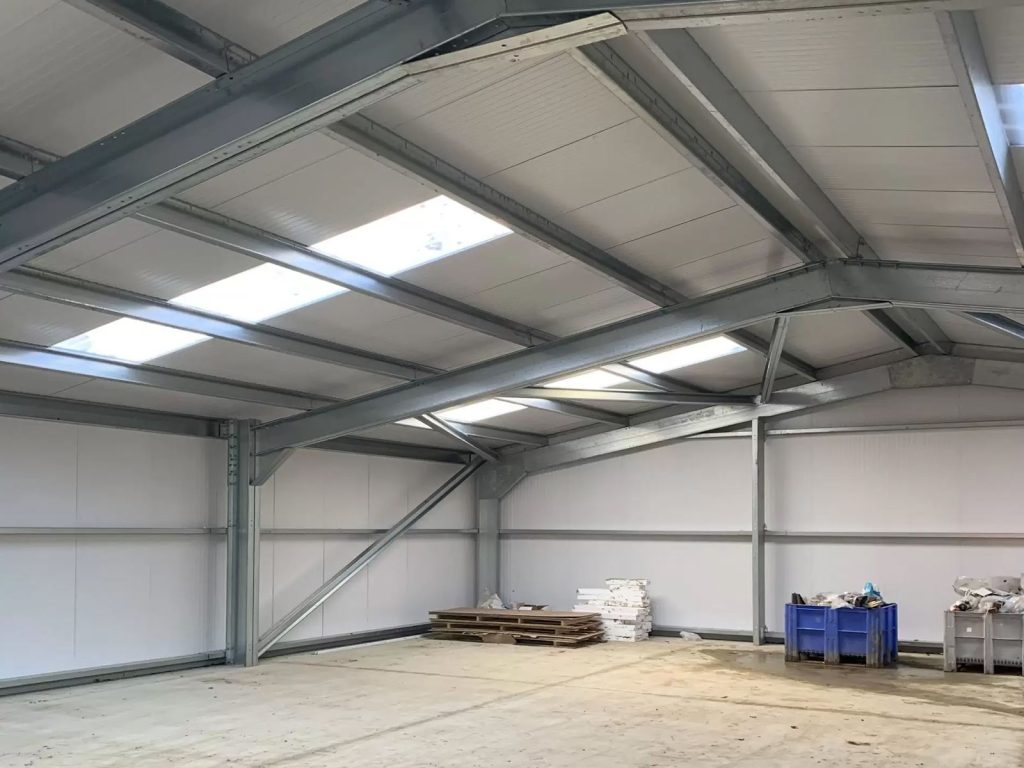
Water dripping from the roof of a steel building on a cold morning is one of the most common problems we get asked about. Most of the time it isn’t a leak at all. It’s condensation, and once you know what causes it, it’s usually straightforward to deal with.
Why Steel Buildings Get Condensation
Air always holds some moisture. When warm, damp air touches a cold surface, it cools down and the moisture turns back into water. You see the same thing on a cold glass or a car windscreen.
In a steel building, that cold surface is usually the underside of the roof sheets. Steel takes on the outside temperature quickly, so on a clear winter night the roof can get colder than the air inside. Moisture collects on the underside of the sheets, then drips onto whatever is stored below. It’s sometimes called “cold roof drip”, and it’s often worst in the autumn and winter, early in the morning.
Is It Condensation or a Leak?
A few things point to condensation rather than a leak:
- Water appears on dry, cold days as well as wet ones.
- The drips are spread across the roof rather than coming from one spot.
- It’s worse first thing in the morning and clears up as the day warms.
- The underside of the sheets is wet all over, not just near a fixing or a joint.
If the water only appears when it rains, and always in the same place, check the fixings, rooflights and flashings, because that’s more likely to be a leak. Our steel building maintenance checklist covers what to look for.
What Makes It Worse
- Single skin roof sheets with nothing on the underside. These are fine for many uses, but they get cold fast.
- Heating the building without insulation. Warmer air holds more moisture, so heating a single skin building can make the drips worse.
- Gas or paraffin heaters. These give off water vapour as they burn, which adds to the problem.
- Moisture from what’s inside. Livestock, wet vehicles, washing down, damp feed or stored crops all put water into the air.
- No airflow. If the building is shut up tight, the damp air has nowhere to go.
How to Prevent Condensation in a Steel Building
Insulated Composite Panels
The best fix is to stop the inside face of the roof getting cold in the first place. Composite panels have insulation between two steel skins, so the inner skin stays close to the temperature inside the building. Because that surface stays warmer, much less moisture collects on it.
This is why we often recommend composite panels for buildings that store goods that can’t get wet, or where people work inside. Durham Animal Feeds chose 40mm composite cladding for their storage building in Rushyford to give their stock some insulation. The same goes for the Firth Brothers building in Newton Aycliffe. Our steel cladding page has more on the options.
Anti-Condensation Lining on Single Skin Sheets
If insulated panels aren’t needed, single skin sheets can be supplied with an anti-condensation fleece bonded to the underside. It doesn’t stop condensation forming, but it holds the moisture in the fleece so it can dry off as the day warms up, rather than dripping. It’s a cheaper option for buildings like machinery stores or open fronted farm buildings, and it needs to be specified when the sheets are ordered.
Ventilation
Moving air carries moisture out before it settles. Ridge vents, ventilation panels and gaps at the eaves all help, and they’re especially important in agricultural buildings with livestock. Ventilation panels are one of the accessories we can add to a building.
How You Use the Building
Some changes cost nothing. Avoid gas heaters in an uninsulated building, let wet vehicles drip outside where you can, and open doors on dry days to let air through. If you’re heating the building, it needs insulating first.
Can You Fix Condensation in an Existing Building?
Yes, though it’s easier and cheaper to get it right at the start. On existing buildings, the usual options are to improve ventilation, add insulation, or replace single skin sheets with composite panels. If the roof is getting old anyway, re-roofing with composite panels sorts both problems at once. We do this as part of our steel building refurbishment work. There’s more on the options in our guide to improving the insulation of steel framed buildings.
Plan for It From the Start
The easiest time to deal with condensation is when the building is being designed. If you tell us what you’ll be storing, whether people will work inside and whether you plan to heat it, we can recommend the right cladding from day one. Request a quote and we’ll talk it through.