
So, you’ve decided to go ahead with a steel building. Brilliant choice. Whether it’s a new workshop, warehouse, agricultural unit or commercial storage facility, steel frame construction is one of the smartest investments you can make for your business.
But here’s something a lot of people don’t think about until it’s too late — the building itself is only part of the job. What happens before the steel goes up can make or break the whole project.
Getting your site properly prepared isn’t just a “nice to have.” It directly affects how smoothly the installation goes, how long it takes, and what it costs. The good news? With the right team behind you (and a bit of forward planning), it really doesn’t have to be stressful.
Here’s everything you need to know about preparing for a steel building installation in the North East.
Start With a Proper Site Survey
Before anything else happens, your site needs to be properly assessed. This isn’t just a quick look around — a thorough survey will look at ground conditions, drainage, access routes, and the overall suitability of the land for your build.
At Hamilton Steel Buildings, every project starts here. Understanding what’s underneath your feet matters just as much as what you’re planning to put on top.
Ground conditions vary enormously across the North East — from coastal sites near Sunderland and South Shields to more inland industrial plots around Gateshead, Durham and Teesside. What works for one site won’t necessarily work for another, which is why a one-size-fits-all approach just doesn’t cut it.
What About Groundworks and Foundations?
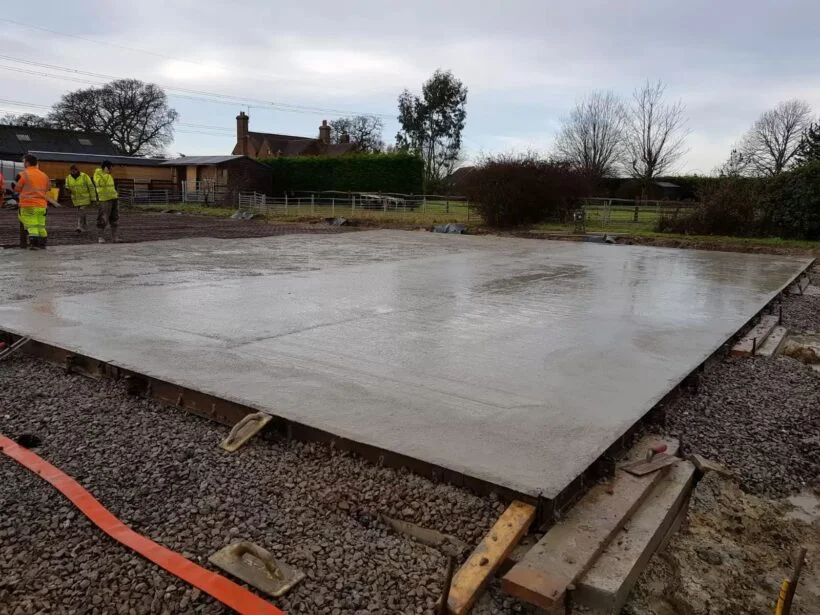
This is where a lot of people get a bit nervous, usually because they’ve heard stories about foundations costing a fortune. The good news is that cold rolled steel buildings are actually significantly lighter than traditional construction methods, which means your foundations don’t need to be as heavy or as expensive.
That said, they still need to be done properly.
Good groundwork includes designing a solid base, factoring in drainage requirements, and where necessary, looking at piling. Done right, it sets everything else up for success. Done wrong, and you’ll be dealing with problems for years.
The team at Hamilton Steel Buildings handles all groundwork in-house as part of a full turnkey service — so you’re not juggling multiple contractors or trying to coordinate separate trades. One point of contact, start to finish. (Trust me, that makes life a lot easier.)
Do You Need Planning Permission?
This is one of the most common questions we hear — and the honest answer is: it depends.
Some steel buildings fall under permitted development rights, meaning you don’t need formal planning permission. Others — particularly larger structures, or those in certain locations — will need full planning approval.
Either way, you’ll need Building Control approval, and that means structural calculations and GA (General Arrangement) drawings are essential. Hamilton Steel Buildings provides all of these free of charge as part of every project, which is worth knowing if you’ve been quoted elsewhere and found those costs adding up fast.
If you’re unsure about your planning situation, it’s always worth getting advice early. Leaving it too late can cause real delays.
Sorting Site Access Before Installation Day
Here’s one that often gets overlooked: can the delivery vehicles actually get to your site?
Steel buildings arrive in sections, and those sections are often large. If your site has a narrow entrance, low overhead cables, soft verges or restricted turning space, you need to flag this before the project starts — not on the day the lorry turns up.
Whether your project is in Newcastle, Middlesbrough, Stockton, Durham or anywhere else across the North East, site access needs to be planned and confirmed in advance. A bit of preparation here saves everyone a headache on installation day.
Clearing and Levelling the Plot
Once the groundworks are sorted and access is confirmed, the area where the building will stand needs to be cleared and properly levelled. That means removing any debris, vegetation, existing structures or anything else that’s in the way.
This sounds obvious, but it’s amazing how often this step gets underestimated. Even a relatively small amount of preparation work at this stage can speed up the installation significantly.
Think About Cladding and Fit-Out From the Start
It’s easy to think of the steel frame as the whole project and everything else as an afterthought — but if you’re planning on insulated cladding, roller shutter doors, windows, skylights or personnel access doors, these need to be factored into the design from the beginning.
Retrofitting features that weren’t planned in from the start costs more time and money. If your building needs to be thermally efficient — say, for a workspace or storage facility where condensation is a concern — insulated panel cladding is something to consider early in the process, not after the frame is already up.
Why Choose a Turnkey Steel Building Installer in the North East?
Working with a company that handles everything from groundworks through to the finished building — rather than managing five different contractors yourself — is a completely different experience.
Hamilton Steel Buildings has been delivering steel frame buildings across the North East for years, with clients spanning agricultural, commercial and industrial sectors. With an unblemished health and safety record, free structural calculations, and a dedicated project manager on every job, you know what you’re getting from day one.
If you’re at the planning stage for a new steel building in County Durham, Tyne and Wear, Teesside, Northumberland or the wider North East region — get in touch for a no-obligation conversation and a free quote.