
How Current Middle East Tensions Could Impact the UK Construction and Steel Building Industry
Global events often have far reaching consequences, particularly in industries that rely heavily on international supply chains. The ongoing geopolitical tensions in the Middle East have already begun to raise concerns across several sectors, including energy, logistics, and manufacturing. For the UK construction sector and steel building suppliers, these developments could potentially influence costs, supply timelines, and overall project planning.
At Hamilton Steel Buildings, we closely monitor global developments that may affect our industry and our clients. Understanding these impacts helps businesses plan ahead and maintain stability during uncertain times.
Energy Prices and Manufacturing Costs
One of the most immediate impacts of instability in the Middle East is the potential fluctuation in global energy prices. The region plays a significant role in the global supply of oil and gas, and any disruption to these supplies can cause price increases worldwide.
Steel production is an energy intensive process, and increases in energy costs can directly affect manufacturing expenses. This can potentially lead to rising prices for raw materials such as steel coils, structural components, and fabricated elements used within steel buildings.
For contractors and developers, this means that project budgets may need to account for possible fluctuations in material costs over time.
Supply Chain Disruptions
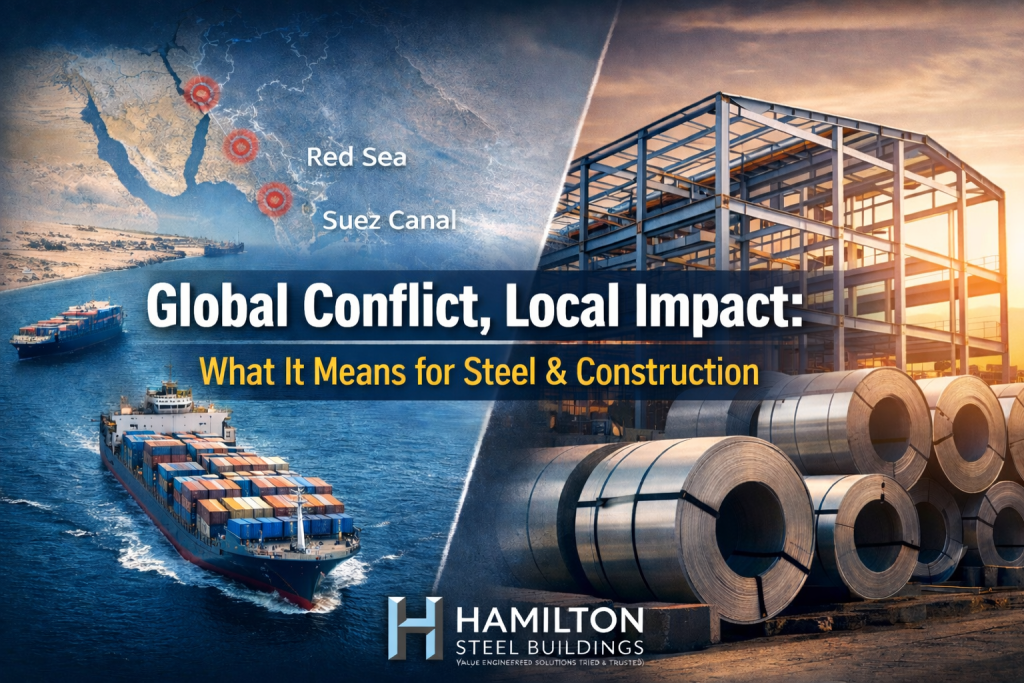
Another important consideration is the impact on global shipping routes. Key maritime routes such as the Red Sea and the Suez Canal are critical for transporting goods between Asia, the Middle East, and Europe.
Any disruption or increased risk within these shipping corridors can lead to delays, increased insurance costs for shipping companies, and longer transit times. These factors may ultimately influence the delivery schedules of materials used within construction projects.
Although many UK steel suppliers source materials domestically or from Europe, global supply chains remain interconnected. Delays or shortages in one region can still ripple across the wider market.
Potential Impact on Construction Projects
For construction projects across the UK, the most likely impacts could include:
-
Increased steel material costs
-
Longer lead times for certain products
-
Higher transportation and logistics costs
-
Greater uncertainty when pricing projects months in advance
For developers and contractors, this means that early project planning and securing materials sooner may become increasingly important.
Planning Ahead in an Uncertain Market
While geopolitical events are beyond the control of the construction industry, proactive planning can help minimise disruption. Working with experienced suppliers who understand supply chain risks and procurement strategies can help ensure projects remain on schedule.
At Hamilton Steel Buildings, we continue to work closely with trusted suppliers and manufacturers to maintain reliable delivery timelines and competitive pricing wherever possible.
Supporting Clients Through Market Changes
The steel building sector has always adapted to market challenges, from supply shortages to economic fluctuations. Through careful planning, strong supplier relationships, and effective project management, it is still possible to deliver high-quality building solutions even during periods of global uncertainty.
For businesses considering a new steel building or extension project, the best approach is often to start the conversation early. This allows time to plan for potential market changes and secure materials where necessary.
If you are planning a new steel building, warehouse, or extension project, Hamilton Steel Buildings can provide expert advice and tailored solutions to suit your requirements.